
Scaled Echo Island's six-brand UK apparel portfolio to £300K at 6.45 ROAS.
Echo Island operates a multi-brand UK apparel portfolio — Crosshatch, Spindle, Parka London, Bench, Volto, Althorpe, and Firetrap — across one of Amazon's most competitive categories. This is the December playbook: how portfolio-level orchestration, competitor conquesting, and SKU isolation drove £296,967 in 31 days without inflating base spend.
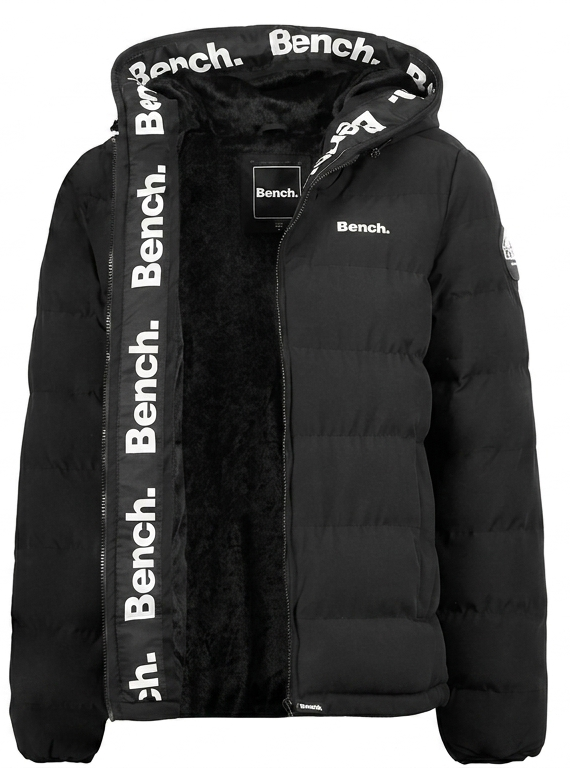
Six brands, one Q4, and a category where every SKU has a near-identical competitor.
UK apparel on Amazon is one of the most contested categories in the marketplace. Every winter jacket has six competitors at varying price points. Every shirt SKU competes with mid-tier private-label sellers willing to operate at razor-thin margins. Sizes, colors, and fitment add additional complexity at the variation level.
Echo Island came in with three intersecting challenges:
- Six brand portfolios, each with distinct ACoS targets, brand-defense priorities, and seasonality curves.
- Q4 peak just weeks away — meaning the strategic window for architectural changes was already closing. Optimization had to ship without disrupting active demand.
- Branded search demand was strong on names like Crosshatch and Parka London — but competitor conquesting on those brand terms was eroding share.
The brief: defend brand share, capture competitor share, scale SKU winners — and don’t let blended ACoS run above 18%.
Stop thinking campaign-by-campaign. Start thinking portfolio.
The instinct in a six-brand account is to optimize each brand in isolation — six parallel optimization workstreams running on their own cadence. That works in theory, but breaks in Q4. Budgets compete for the same daily ad spend ceiling. Negative keywords across brands conflict. Competitor conquesting overlaps between Crosshatch and Bench — same shopper, different brand.
The strategic shift was to treat the six brands as a single portfolio with shared budget orchestration:
- Portfolio budget allocation by margin profile — higher-margin brands (Parka London) got priority during peak windows; lower-margin SKUs got tighter ACoS targets.
- Cross-brand negative keyword cascade — preventing Crosshatch campaigns from cannibalizing Bench impressions on shared category terms.
- Competitor conquesting layer — coordinated across all six brands, with bid suppression on overlapping search terms to avoid bidding against ourselves.
- SKU-level performance segmentation — top decile of SKUs got isolated single-keyword exact-match campaigns; bottom-decile SKUs got pulled from active spend entirely until listing CRO improved.
In multi-brand portfolios, the budget is the strategic asset, not the campaign. Every pound of spend has to know exactly which brand, which SKU, and which intent it’s funding — or it gets pulled.
Five phases, one December.
Portfolio Mapping & Budget Orchestration
Phase 01 · Pre-Peak Prep
Built a portfolio-level dashboard mapping each of the six brands by: contribution margin per SKU, branded vs. non-branded search demand, current ACoS, and Q4 inventory position. This produced a spend-priority matrix — which brand got peak-window budget priority, which got steady-state allocation, which got suppressed.
Output: a daily-budget allocation plan calibrated to each brand's role in the portfolio, refreshed weekly during peak.
- Portfolio Mapping
- Margin-First Allocation
- Inventory-Aware Bidding
Brand Defense via SB + PPD
Phase 02 · Defense Layer
Sponsored Brands campaigns deployed on each brand's own name terms with aggressive Top-of-Search bid modifiers. This stops competitor conquesting on Crosshatch's brand searches — which UK apparel buyers do constantly, comparison-shopping between mid-tier brands.
Sponsored Display PPD (Product Page Defense) campaigns layered on each brand's hero PDPs — keeping competitor ASIN ads off the brand's own product pages where shoppers had landed with intent.
- SB Brand Defense
- PPD Layer
- TOS Bid Modifiers
- SD Retargeting
- Hero PDP Protection
Coordinated Competitor Conquesting
Phase 03 · Conquesting
Identified ~40 mid-tier UK apparel competitor brands (Superdry sub-lines, Jack & Jones, etc.) where Echo Island's brands held a stronger review profile or comparable price point. Built ASIN-targeted SP and SD campaigns against their hero PDPs.
Critical execution detail: bid suppression on overlapping competitor terms. If Crosshatch and Bench were both eligible to bid against the same Jack & Jones ASIN, only the higher-margin brand would bid — preventing internal auction inflation.
- ASIN Targeting
- Competitor Conquesting
- Bid Suppression Logic
- SP + SD Layered
Top-Decile SKU Single-Keyword Campaigns
Phase 04 · SKU Isolation
Identified the top 10% of SKUs by 90-day contribution margin × velocity. For these SKUs, built isolated single-keyword exact-match campaigns on their highest-converting search terms — with their own daily budgets, separated from broader category spend.
This means a Crosshatch hero SKU's best-performing keyword "crosshatch men's hooded jacket" gets its own campaign, its own bid ceiling, and never has to fight the broader category campaign for impression share. Result: ranking gains on the SKUs that move the P&L most.
- SKC Ranking
- SKU Isolation
- Margin × Velocity Scoring
- Hero SKU Prioritization
Weekly Optimization Cadence Through Peak
Phase 05 · December Discipline
Through December, ran the standard weekly six-step optimization cycle — but compressed to twice-weekly during peak windows (Black Friday, Cyber Monday, mid-December). Bid adjustments tied to target ACoS by brand, search-term harvesting, negative cascade, placement modifier tuning.
The discipline that mattered most: not flooding budgets when daily sales spiked. The instinct in Q4 is to push spend aggressively into the peak — but unit economics break when CPCs climb 30–40% above baseline. Budgets scaled in proportion to ACoS holding, not to top-line sales velocity.
- Twice-Weekly Cadence
- Target ACoS Modeling
- Peak-Window CPC Discipline
- Budget Pacing
31 days. Six brands. £296,967 in tracked sales.
The portfolio delivered a 15.51% blended ACoS and 6.45 ROAS across the full December peak window — well inside the 18% ACoS ceiling, with sales velocity holding through the late-December tail.
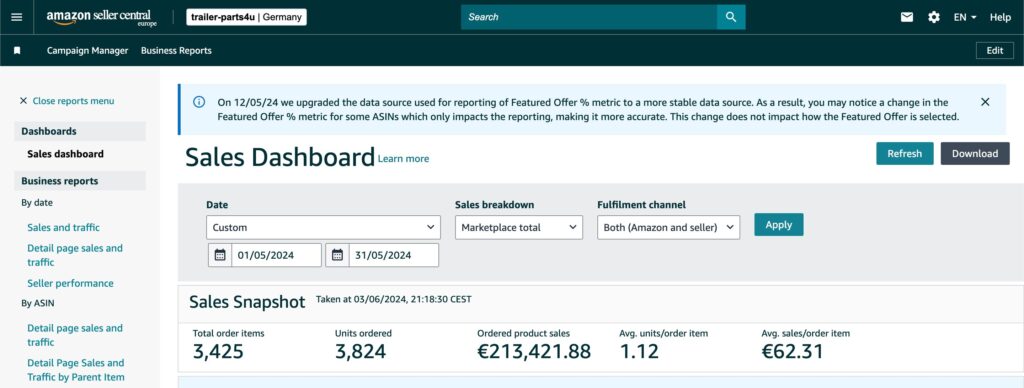
The mid-month dip around Dec 20–22 in the chart above reflects deliberate budget pacing during the post-Cyber-Monday CPC inflation window. Rather than flooding budget into rising auction costs, we held spend back and recaptured the late-December apparel buying surge — December scaling needs discipline, not flooded budgets. Apparel CPCs climb 30–40% above baseline during peak, and scaling proportionally to top-line velocity quietly destroys unit economics.
Three lessons that travel beyond apparel.
01
Portfolio orchestration beats campaign optimization.
In multi-brand accounts, the budget is the strategic asset. Optimizing campaigns in isolation leaves margin on the table.
02
December scaling needs discipline, not flooded budgets.
CPCs climb 30–40% above baseline during peak. Scaling proportionally to top-line velocity breaks unit economics — scale to ACoS holding instead.
03
Brand conquesting is profitable in apparel.
Mid-tier UK apparel buyers comparison-shop heavily. ASIN targeting against weaker competitors with strong review profiles converts at premium ACoS.